12App developmentHealth and medicineIn development and testing
A medication reminder with a safety net
An iPhone and Android app that reminds you to take your medication, and if a dose isn't marked, alerts someone close to you, by medication name.
In development. Alerts a loved one, even with the phone off
The challenge
The category is crowded, and its leader moved basic reminders behind a paywall in early 2026, a move its users are angry about in their reviews. The phone's own operating system now reminds people to take medication too. A better reminder on its own is not enough. And an app that holds health information gets close scrutiny: every privacy statement has to be true to the word, and no alert that passes through outside services may reveal a medication name.
What I did
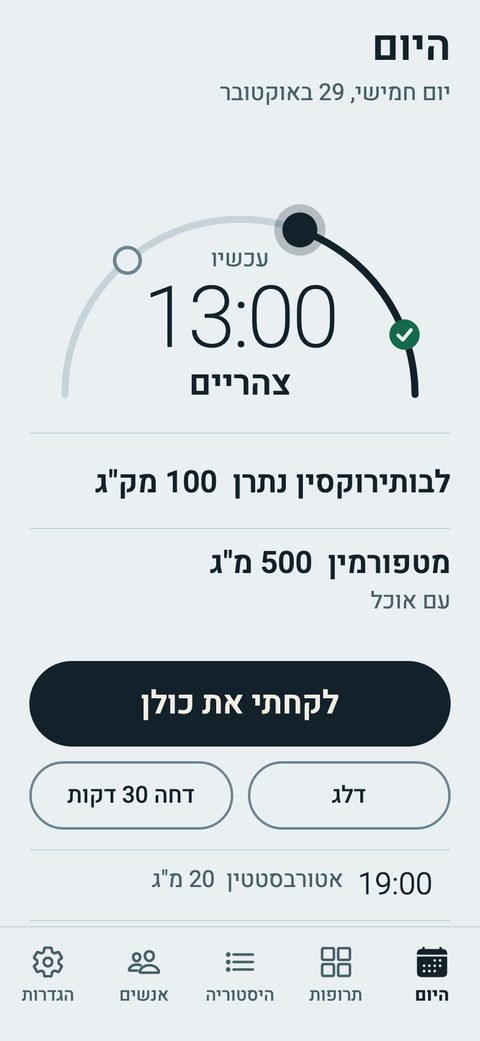
- Made reminders to your own phone free, forever, with no limit. Exactly what the leader took away, and exactly what users never forgive when it gets locked.
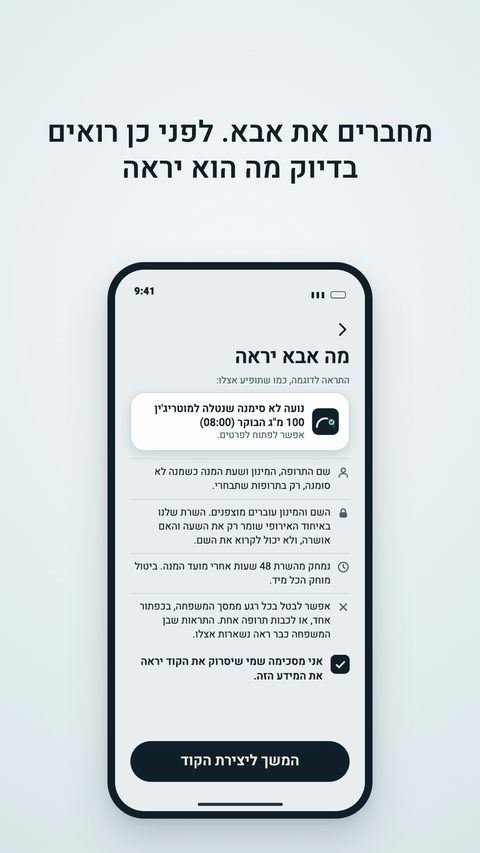
- Built the safety net. When a dose isn't marked, someone the user chose (a partner, a friend, a family member) gets an alert with the medication name. The name is end to end encrypted between the two phones; the server cannot read it, and the other person's phone decrypts it and shows it in the alert.
- Got the wording right to the word. The alert says the person "didn't mark" the dose, not that they "didn't take" it, because the app only knows about the tap. The wrong wording could lead to a double dose. In Hebrew, which is gendered, the app addresses each user the way they choose, through one question, "Which sounds right to you?", showing the same sentence three ways, without the words male or female.
- Built a dosing model that fits real life. Each medication can have one or more doses, each with its own amount, unit and times, stock tracking that warns before you run out, and a PDF report for the doctor in Hebrew, English and German.
- Ran repeated test rounds on iPhone and Android, including large text sizes, until only cosmetic findings were left.
The decision that made the difference
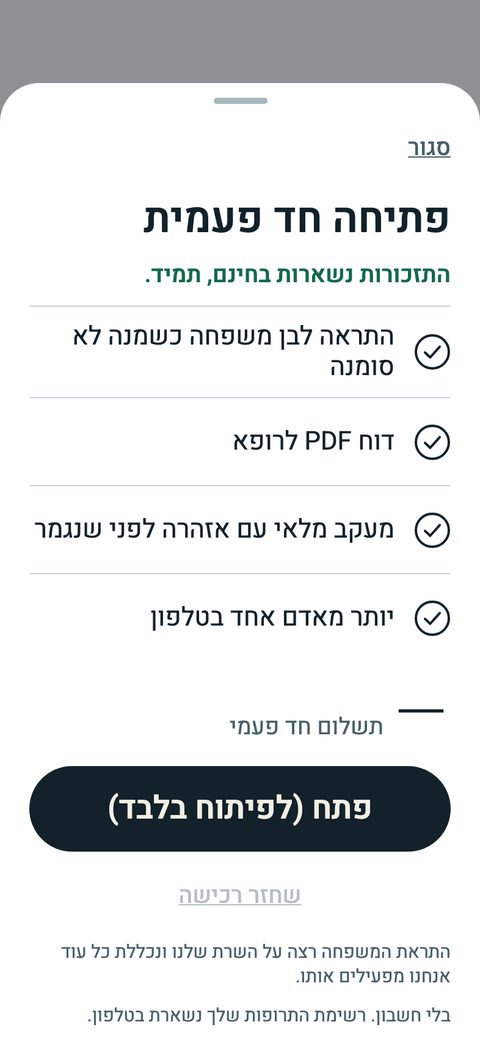
The safety net alert went into the first version, and its check runs on the server, not the phone. The original plan put the alert to another person in the release after launch. I decided it was the feature that matters most and pushed the launch back for it. The check for whether a dose was marked runs on the server every minute, so the alert goes out even if the patient's phone is off or offline, which is exactly when it is needed most. The business model follows from that: a subscription only for what costs money to run over time, the alert to another person. Reminders to yourself are not part of it.
Outcome
- Prices are set: 9.90 ILS a month or 99.90 ILS a year, with a free week on both.
- A demo of the app was shared with a community of people living with epilepsy, ahead of launch.
- In the last documented test round, on iPhone and Android, only cosmetic findings remained.
- The domain caredmeds.com has been bought.